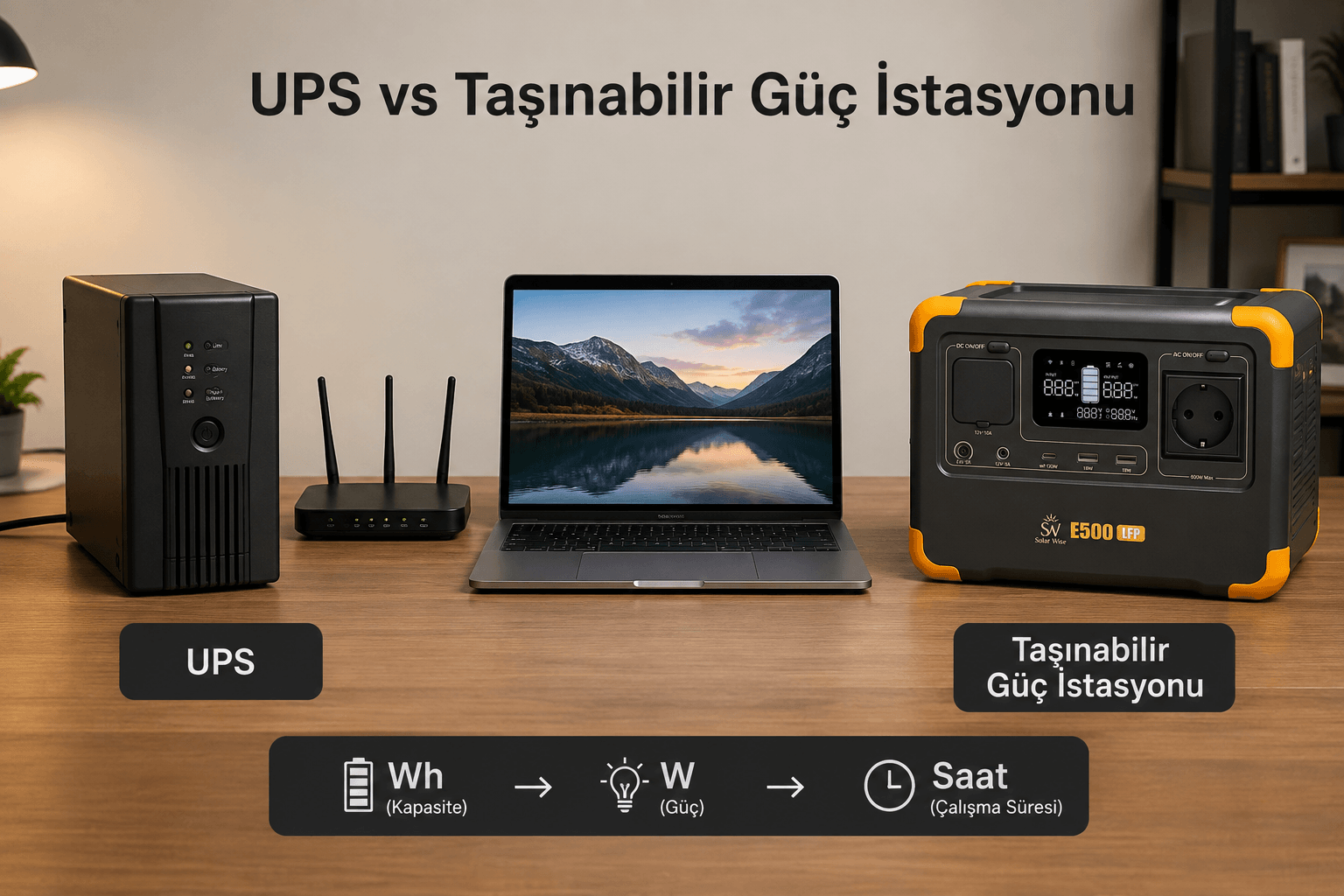
Difference between a UPS and a portable power stati
UPS vs portable power station: compare transfer time, battery capacity, portability, backup power and use cases during power outages.
Solar Wise Energy Team
Portable Energy Specialists
UPS vs Portable Power Station: What's the Difference?
When looking for backup power during an outage, two common solutions are a UPS and a portable power station.
Both can provide energy when grid power is unavailable, but they are designed for different purposes and differ in transfer time, battery capacity, portability, output options and typical use cases.
For this reason, there is no single answer to the question “Should I choose a UPS or a portable power station?”
The right solution depends on the equipment you need to power and how long you need it to operate.
What Is a UPS?
UPS stands for Uninterruptible Power Supply.
A UPS is designed primarily to provide backup power to connected equipment when grid power fails or certain power problems occur.
UPS systems are commonly used with:
Desktop computersNetwork equipmentServersSecurity systemsPOS equipmentOther electronics that should not shut down unexpectedlyHowever, not every UPS operates in the same way.
Standby, line-interactive and online UPS systems use different technologies and can have different transfer characteristics.
For equipment that requires zero-millisecond transfer, an appropriate online UPS may be necessary.
What Is a Portable Power Station?
A portable power station stores electrical energy in an internal battery and makes that energy available through multiple outputs.
Depending on the model, these may include:
AC outletsUSB portsUSB-CDC outputs12V vehicle-style outputsWireless chargingPortable power stations can be used not only during power outages but also for camping, RV travel, mobile work and off-grid applications.
Learn more about portable power stations:
https://solarwise.com.tr/blog/tasinabilir-guc-istasyonu-nedir
Is a Portable Power Station the Same as a UPS?
No.
Some portable power stations include UPS functionality, but that does not mean every portable power station is equivalent to a conventional or online UPS.
A traditional UPS is primarily designed to protect connected equipment against power interruptions.
A portable power station is primarily designed to store energy and provide portable power to a wider range of devices.
Some advanced portable power stations add automatic UPS switching to these features.
Why Does Transfer Time Matter?
When grid power fails, the amount of time required to switch from grid power to battery power can be important for sensitive electronic equipment.
If the interruption lasts too long, a router, computer, POS terminal or other electronic device may restart.
Solar Wise E300LFP and E500LFP models include built-in UPS support with an approximate transfer time of 8–20 ms.
Solar Wise E300LFP:
https://solarwise.com.tr/urun/e300lfp
Solar Wise E500LFP:
https://solarwise.com.tr/urun/e500lfp
This can help compatible routers, laptops, POS terminals and other everyday electronics continue operating during a power outage.
However, there is an important distinction:
An 8–20 ms transfer time is not the same as a 0 ms online UPS.
For servers, professional infrastructure or other systems that require certified zero-millisecond transfer, the equipment requirements should be checked and an appropriate online UPS used when necessary.
What Are the Advantages of a UPS?
The primary advantage of a UPS is its focus on maintaining power to specific equipment during an interruption.
Depending on the UPS technology and use case, advantages can include:
Automatic backup powerProtection for computers and network equipmentDesign optimized for fixed installationsZero-transfer-time options with certain online UPS systemsSpecialized solutions for professional IT infrastructureFor critical servers or other equipment with very low interruption tolerance, selecting the appropriate UPS technology is particularly important.
What Are the Advantages of a Portable Power Station?
One of the main advantages of a portable power station is that the same energy system can be used in multiple locations.
A unit used for backup power at home can also be taken camping, used in an RV or carried to a remote work location.
Depending on the model, benefits can include:
Large battery capacityAC, USB, USB-C and DC outputsPortable operationSolar chargingVehicle chargingDirect charging for phones and laptopsCamping and RV useBackup energy during power outagesDo Solar Wise Portable Power Stations Include UPS Support?
Yes.
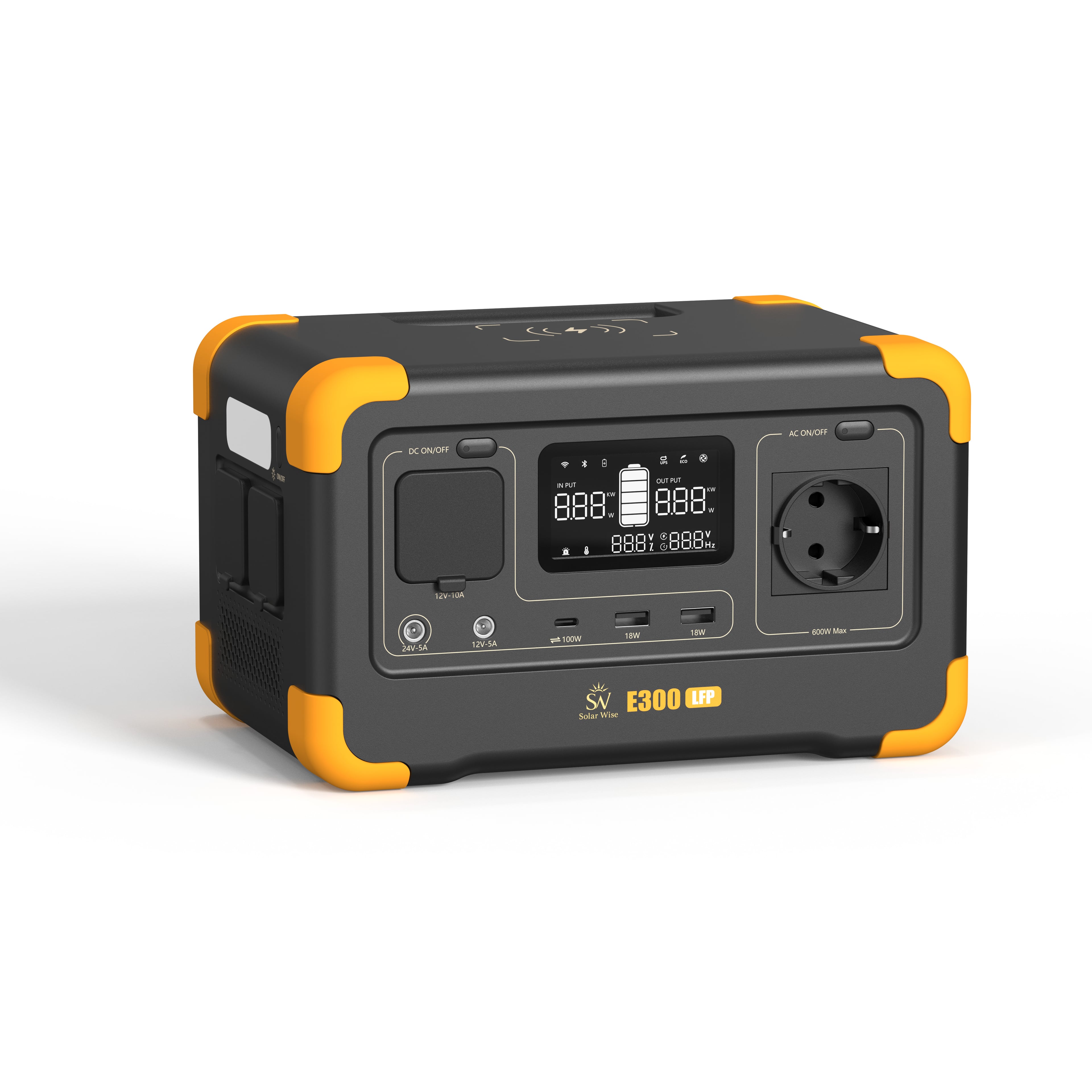
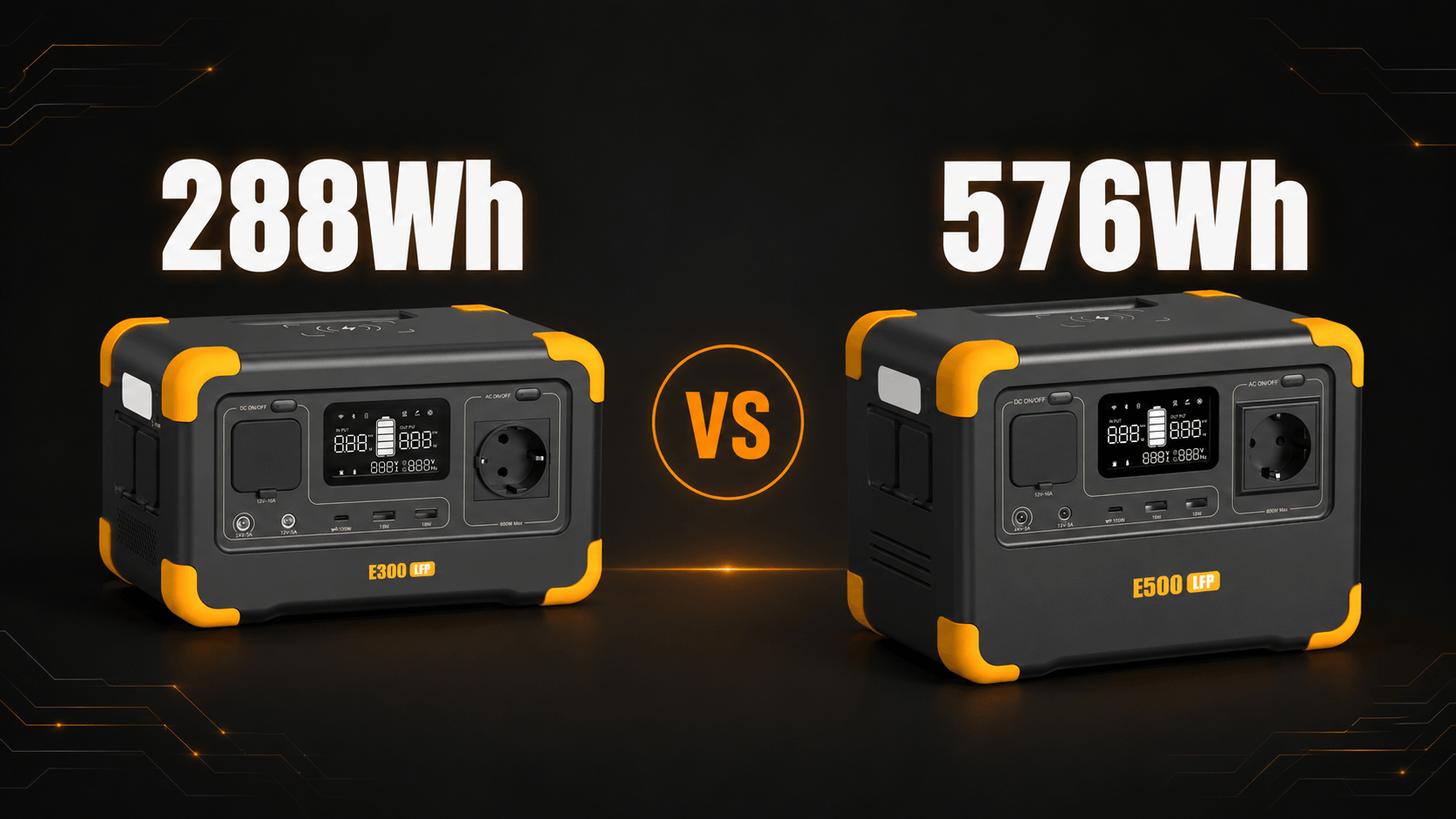
Solar Wise E300LFP and E500LFP include built-in UPS functionality.
E300LFP:
288Wh LiFePO4 battery
600W continuous pure sine wave AC output
Approximately 8–20 ms UPS transfer
https://solarwise.com.tr/urun/e300lfp
E500LFP:
576Wh LiFePO4 battery
600W continuous pure sine wave AC output
Approximately 8–20 ms UPS transfer
https://solarwise.com.tr/urun/e500lfp
This allows compatible equipment to use the power station both as a portable energy source and as automatic backup power during an outage.
UPS or Portable Power Station for a Router?
For modems and Wi-Fi routers, both automatic transfer and battery runtime can be important.
According to Solar Wise product usage data:
E300LFP can operate a Wi-Fi router for up to 20 hours.
E500LFP can operate a Wi-Fi router for up to 40 hours.
Actual runtime depends on device consumption, operating conditions and the total connected load.
E300LFP:
https://solarwise.com.tr/urun/e300lfp
E500LFP:
https://solarwise.com.tr/urun/e500lfp
UPS or Portable Power Station for a Laptop?
Laptops have their own internal batteries, so very short power interruptions do not normally shut down the laptop itself.
However, a backup energy source becomes more important when the modem, monitor or other equipment must also remain operational.
A portable power station can provide power to a laptop while also supplying compatible peripheral equipment.
According to Solar Wise usage data, the E300LFP provides up to approximately 6 hours of office laptop use, while the E500LFP provides up to approximately 12 hours.
Actual runtime can vary with operating conditions and power consumption.
What About POS Systems and Small Businesses?
For a small business, keeping the POS terminal, internet connection and computer operational during a power outage can be important.
Two factors should be evaluated:
Transfer time: How much interruption the connected equipment can tolerate.
Battery capacity: How long the equipment needs to continue operating.
The 8–20 ms UPS support in Solar Wise E300LFP and E500LFP can help reduce disruption for compatible POS terminals, routers and similar equipment.
The technical requirements of the connected equipment should always be verified before use.
Can a Portable Power Station Be Used for Servers?
There is no universal answer for servers and critical IT infrastructure.
Some systems can tolerate a short transfer interval, while other professional systems require zero-millisecond transfer.
Solar Wise E300LFP and E500LFP provide approximately 8–20 ms UPS switching and are not 0 ms online UPS systems.
For servers or critical systems that require certified zero-transfer-time operation, an appropriate professional online UPS should be used.
What About Camping and RV Use?
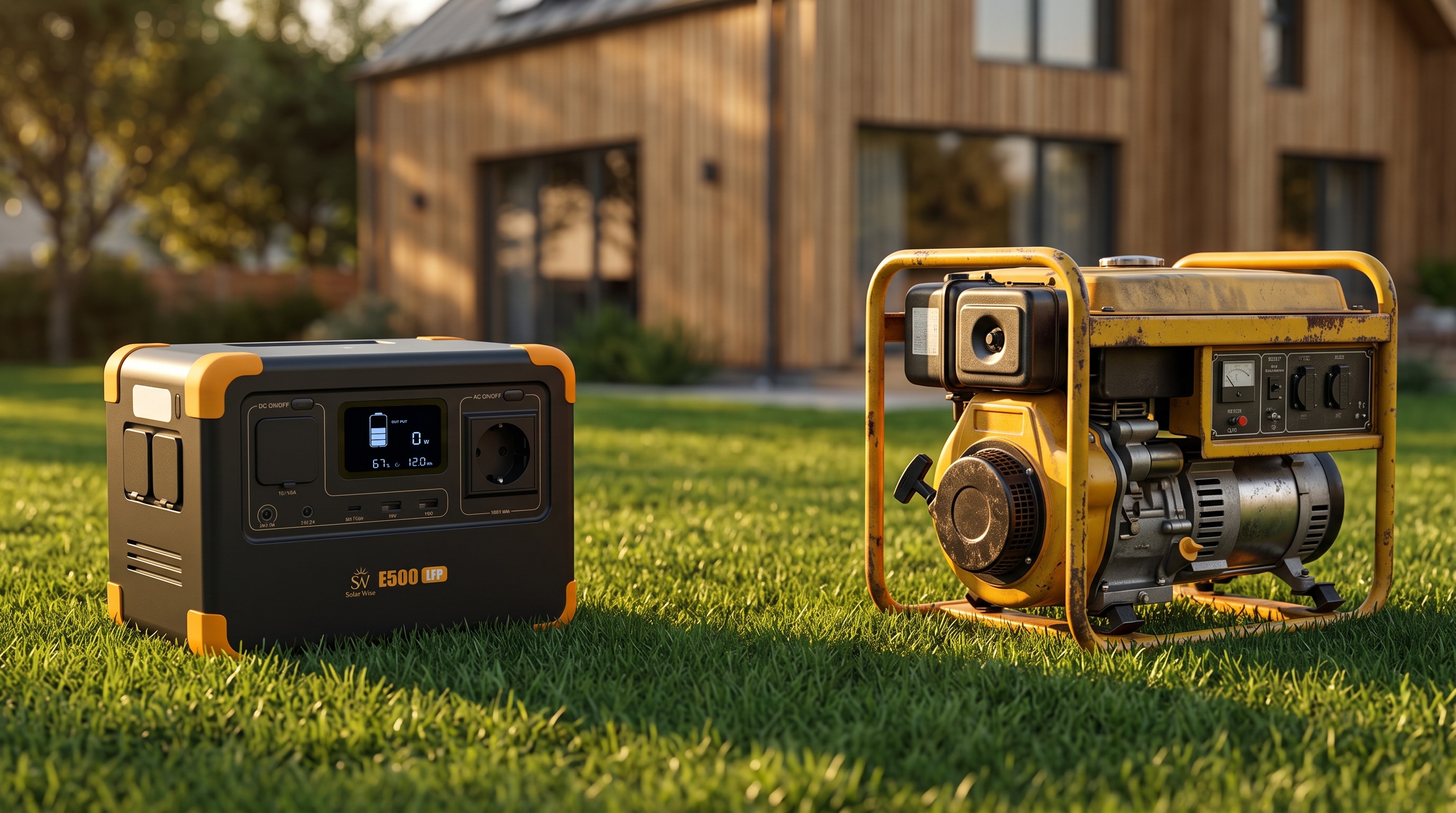
Traditional UPS systems are generally optimized for fixed backup applications and may not offer the same flexibility as a portable power station for camping or RV use.
Portable power stations can combine stored battery energy with multiple outputs and, in supported models, solar charging.
Solar Wise power station and solar panel MaxPack options:
https://solarwise.com.tr/magaza
Should I Choose a UPS or a Portable Power Station?
If your only requirement is to protect a desktop computer, server or other fixed equipment against interruptions, the appropriate UPS class should be evaluated first.
If you need:
Longer backup energy during outagesPower for a modem and laptopMultiple types of devicesCamping or RV powerSolar chargingPortable energya portable power station may provide a more versatile solution.
A portable power station with integrated UPS functionality can combine some advantages of both categories in a single device.
Quick Comparison
UPS
Primary purpose: Backup for connected equipment
Portability: Depends on model
Solar charging: Usually not a primary feature
Output options: Depend on model
Transfer time: Depends on UPS technology
0 ms options: Available with certain online UPS systems
Portable Power Station
Primary purpose: Energy storage and portable power
Portability: High
Solar charging: Available on supported models
Output options: AC, USB, USB-C, DC and more
Transfer time: Depends on model if UPS functionality is included
0 ms: Not standard on all models
Conclusion
A UPS and a portable power station are not the same product.
A UPS is primarily designed to keep connected equipment powered through an interruption, while a portable power station is a more versatile stored-energy system designed for multiple environments and devices.
Some portable power stations combine these capabilities by adding built-in UPS functionality.
Solar Wise E300LFP and E500LFP provide approximately 8–20 ms UPS switching, but this is not equivalent to a 0 ms online UPS.
Solar Wise E300LFP:
https://solarwise.com.tr/urun/e300lfp
Solar Wise E500LFP:
https://solarwise.com.tr/urun/e500lfp
Portable power station guide:
https://solarwise.com.tr/blog/tasinabilir-guc-istasyonu-nedir
What a 600W power station can run:
https://solarwise.com.tr/blog/600w-guc-istasyonu-neleri-calistirir
Comments
Be the first to comment
Log in to leave a comment.
Log InNo comments yet. Be the first to comment!