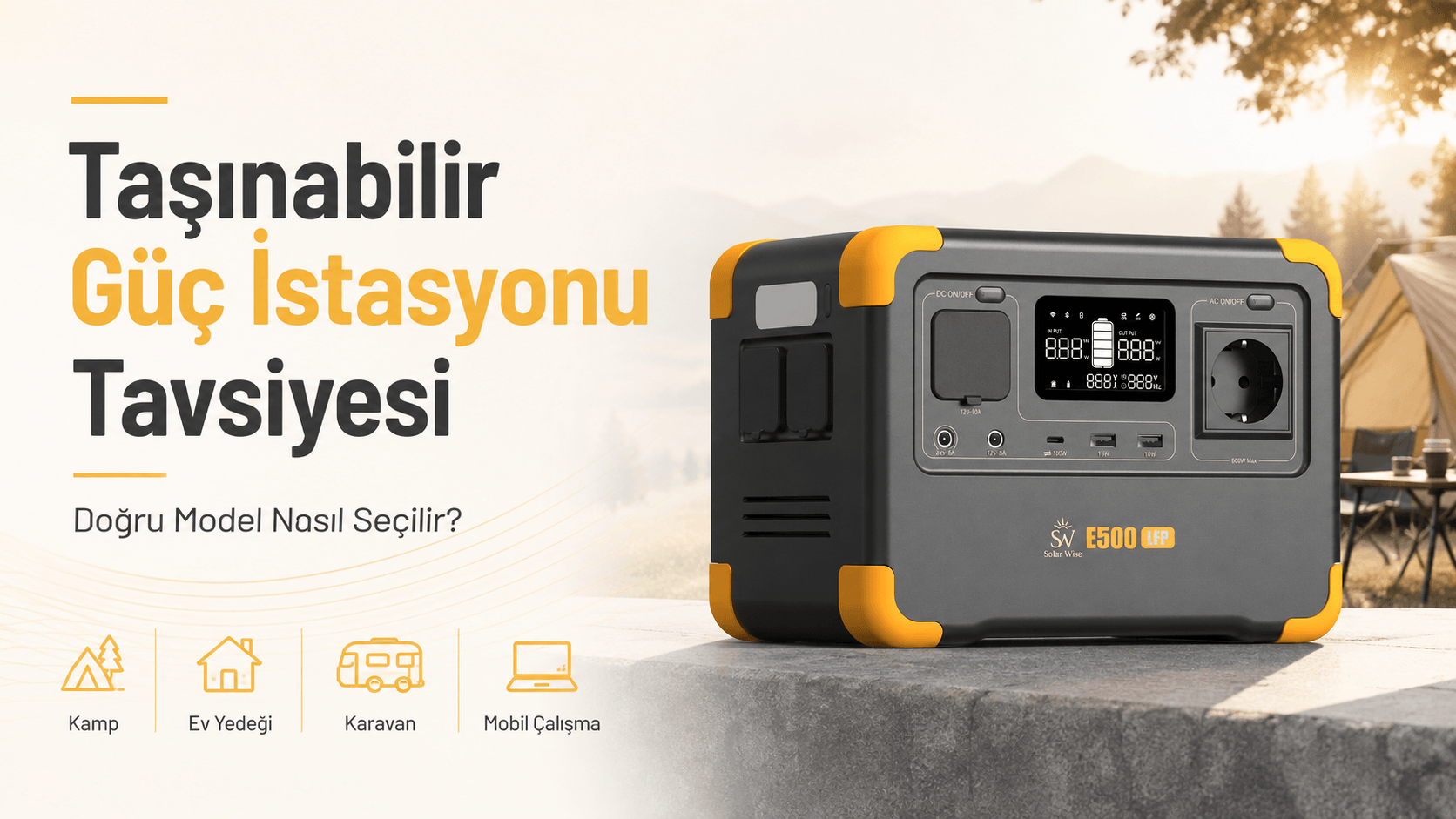
Portable Power Station Buying Guide: What Should You Look For?
Choosing a portable power station requires more than comparing watts. Learn how battery capacity, LiFePO4 technology, UPS support, ports, portability and your intended use affect the right choice.
Solar Wise Energy Team
Portable Energy Specialists
- Which devices do I want to power?
- How long do I want to use those devices?
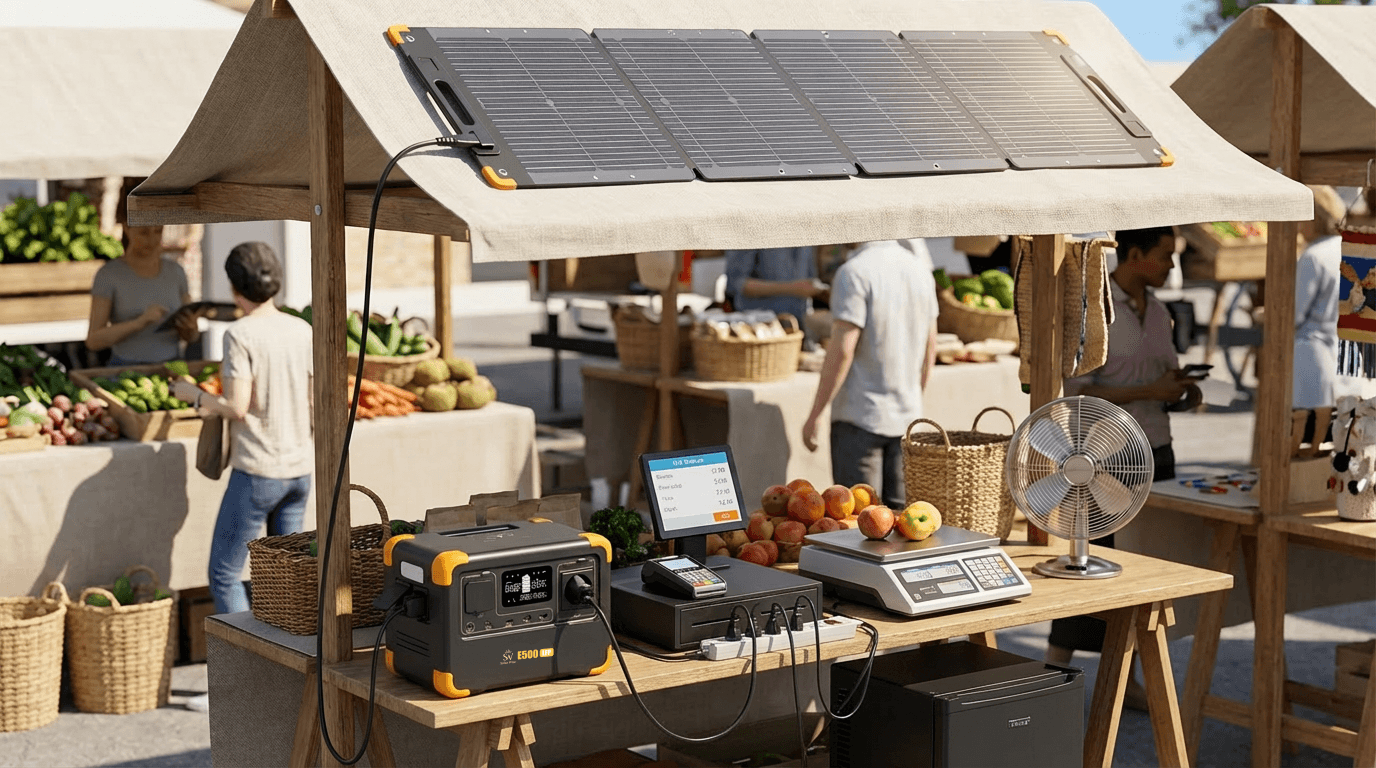
One of the most common mistakes when buying a portable power station is making a decision based only on wattage or battery capacity. The right choice actually depends on which devices you want to power, how long you want to use them and where you plan to use the power station.
A unit intended for camping may require different priorities from one used for caravan trips, mobile work or backup power during electricity outages.
This guide explains the key specifications to consider before choosing a portable power station.
What Should You Determine First?
Start by answering two questions:
The first question helps determine the required output power in watts (W). The second helps determine the required battery capacity in watt-hours (Wh).
1. Output Power: How Many Watts Do You Need?
The wattage of a portable power station indicates how much power it can deliver to connected devices.
If a device requires more power than the station can provide, having a larger battery capacity will not solve the problem.
If several devices will be used at the same time, their combined power requirements should also be considered.
2. Battery Capacity: Why Does Wh Matter?
Watt-hours (Wh) indicate how much energy is stored in the battery.
Two power stations may provide the same output power while having different battery capacities.
| Model | Battery Capacity | Continuous AC Output |
|---|---|---|
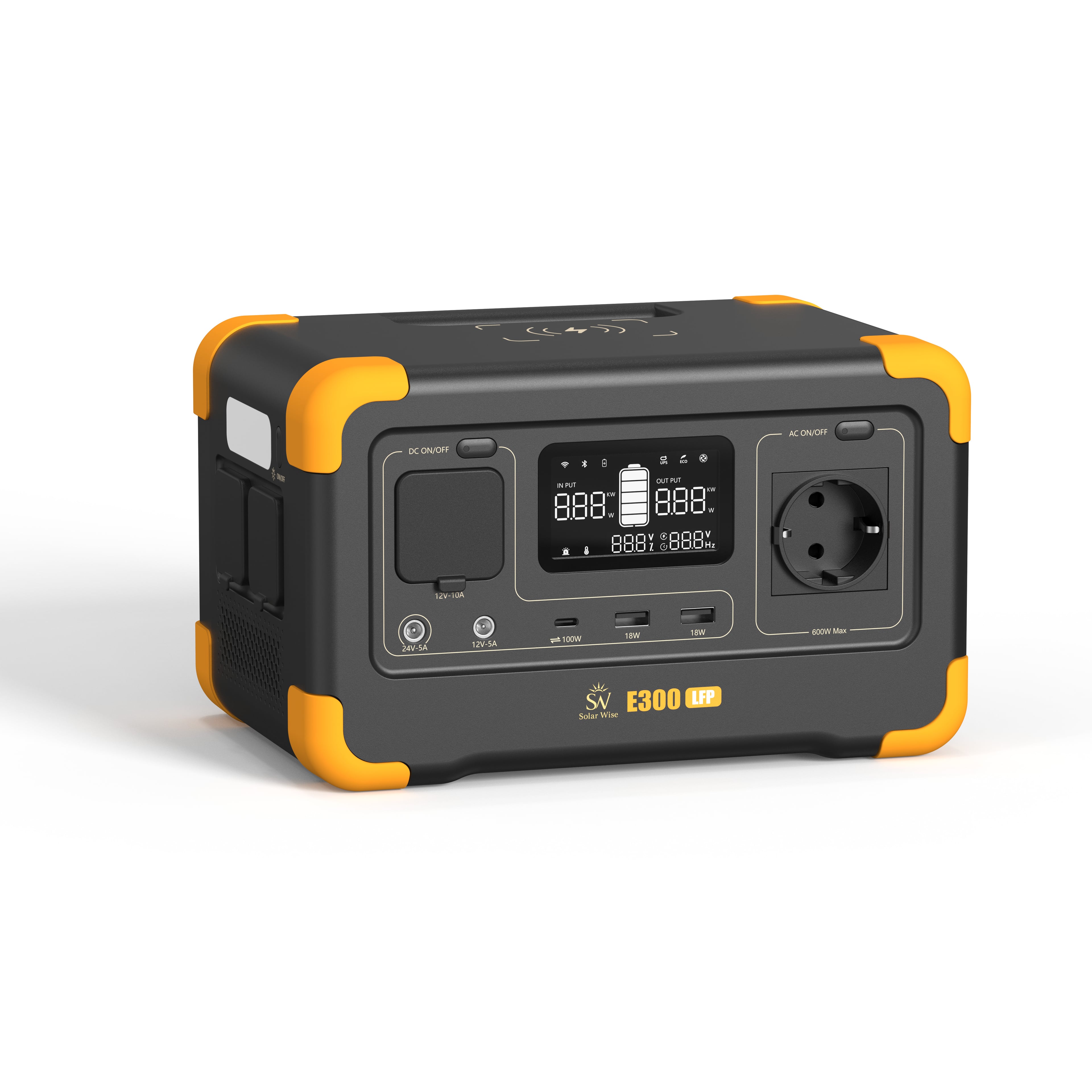
| E300LFP | 288Wh | 600W pure sine wave |
| E500LFP | 576Wh | 600W pure sine wave |
Although both models provide 600W continuous AC output, the E500LFP stores more energy with its 576Wh battery compared with the E300LFP's 288Wh battery.
3. Check the Battery Technology
Battery chemistry is another important consideration.
LiFePO4 (Lithium Iron Phosphate) batteries are commonly used in portable energy systems because of their long cycle life, thermal stability and suitability for frequent use.
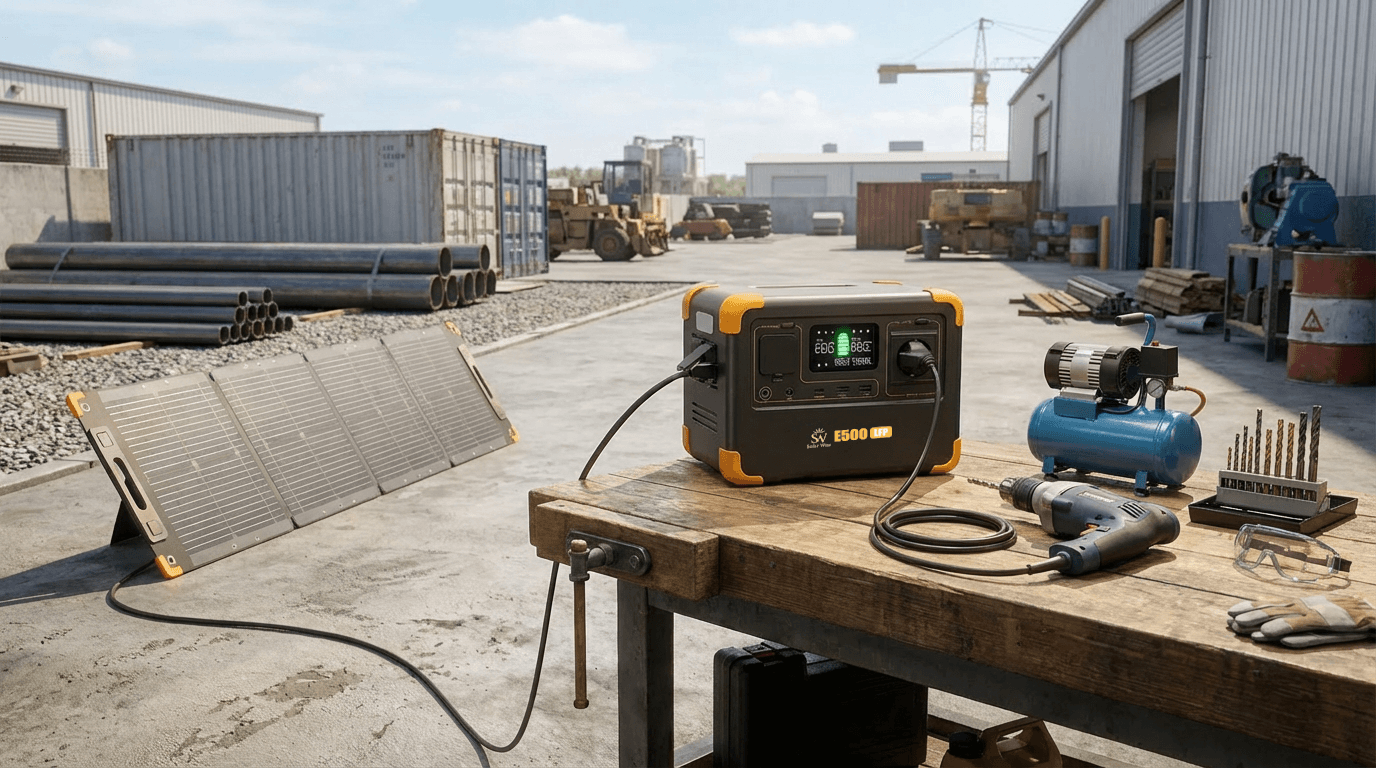
Both Solar Wise E300LFP and E500LFP use LiFePO4 battery technology.
4. Why Does Pure Sine Wave Output Matter?
If you plan to use AC-powered electronics, the type of inverter matters.
A pure sine wave output provides a smooth AC waveform similar to mains electricity and is an important feature for devices such as laptop chargers, televisions and other electronics.
Both E300LFP and E500LFP provide 600W continuous pure sine wave AC output.
5. Do Not Ignore Starting Power
Some devices require more power when they first start than they do during normal operation.
This is particularly important for equipment containing motors, pumps or compressors.
For these devices, checking only the normal operating wattage may not be sufficient. Starting or surge power requirements should also be considered.
6. Choosing a Power Station for Electricity Outages
A portable power station can also provide backup power for compatible devices during electricity outages.
In this scenario, UPS support and transfer time become important considerations.
Solar Wise E300LFP and E500LFP provide UPS support with an 8–20 ms transfer time.
This should not be interpreted as a 0 ms transfer. The tolerance of the connected device should also be considered.
7. Choosing a Portable Power Station for Camping
For camping, portability is often just as important as battery capacity.
If your power requirements are limited to devices such as phones, laptops or lighting, a more compact model may be sufficient.
If you need more stored energy or plan to remain away from mains electricity for longer periods, a higher Wh capacity can be more useful.
The E300LFP provides 288Wh capacity and weighs approximately 4.8 kg.
The E500LFP provides 576Wh capacity and weighs approximately 6.75 kg.
8. Choosing a Power Station for Caravan Use
For caravan use, consider not only the wattage of individual devices but also your total daily energy requirement.
Repeated use of laptops, mobile devices, lighting and other electronics throughout the day increases overall energy consumption.
In this scenario, battery capacity can become as important as maximum output power.
9. Is Solar Charging Important for You?
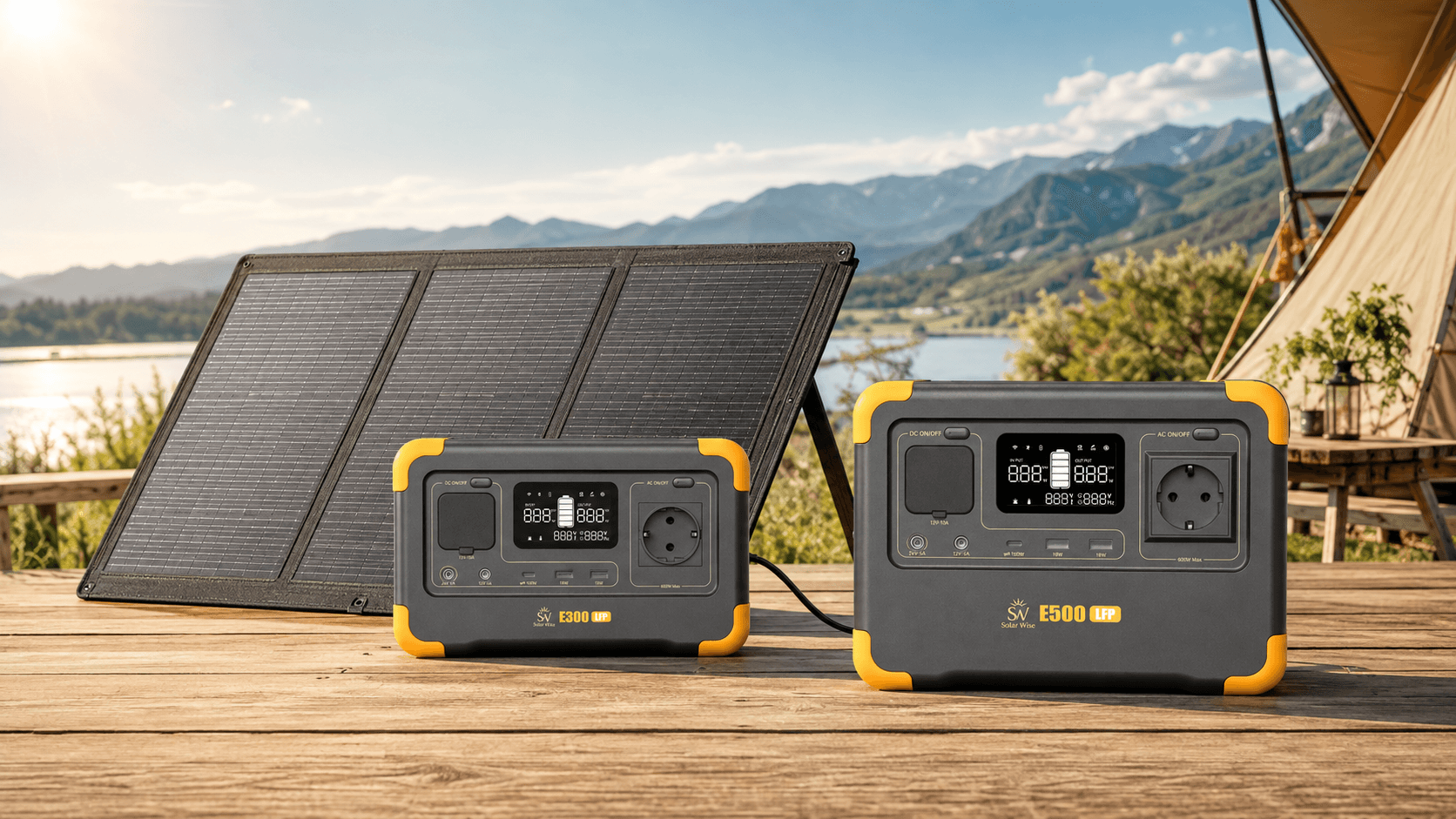
If you plan to use the power station away from mains electricity, solar charging support can be a useful feature.
However, a solar panel should not be selected only according to its advertised wattage. Its voltage and power must be compatible with the solar input specifications of the power station.
The E500LFP supports 12–28V MPPT solar input with a maximum solar input of 100W.
10. Check the Available Output Ports
A portable power station is more than an AC outlet.
Depending on the devices you use, USB-C, USB-A, DC and 12V outputs can significantly improve everyday usability.
Both E300LFP and E500LFP provide 100W USB-C PD support for compatible devices.
11. How Should You Compare Portable Power Station Prices?
Price should not be considered in isolation.
Compare the following specifications together:
- Battery capacity in Wh
- Continuous output power
- Battery chemistry
- Pure sine wave inverter
- UPS support
- USB-C and other outputs
- Solar charging support
- Warranty and technical support
Two products with the same wattage can differ significantly in battery capacity and other features.
12. What Is the Best Portable Power Station?
There is no single best portable power station for every user.
The best model is the one that matches your actual power requirements and intended use.
If portability and lower energy requirements are the priority, a 288Wh model such as the E300LFP may be suitable.
If you need more stored energy and longer operating time, a 576Wh model such as the E500LFP may be a better fit.
E300LFP or E500LFP?
- E300LFP: 288Wh battery capacity, 600W continuous pure sine wave AC output and approximately 4.8 kg weight. Suitable when lower energy requirements and portability are priorities.
- E500LFP: 576Wh battery capacity, 600W continuous pure sine wave AC output and approximately 6.75 kg weight. Suitable when higher stored energy and longer use are required.
Portable Power Station Buying Checklist
- Check the wattage of the devices you plan to use.
- Calculate the combined power requirement when using multiple devices.
- Determine how long you need to use those devices.
- Compare battery capacity in Wh.
- Check the battery chemistry.
- Check whether the inverter provides pure sine wave output.
- Consider starting power for motor- or compressor-based equipment.
- Check UPS support if backup power is important.
- Consider weight for camping and caravan use.
- Check solar input and available output ports.
Frequently Asked Questions
How many watts should a portable power station have?
The required wattage depends on the devices you plan to power. If multiple devices will be used simultaneously, their combined power requirement should be considered.
What does Wh mean on a portable power station?
Wh indicates the amount of energy stored in the battery. A higher Wh value means more stored energy, but it does not automatically mean higher output power.
Is a 600W portable power station enough?
It depends on the devices you plan to use. Their operating power and, when relevant, starting power must remain within the supported limits of the power station.
Which is better for camping, E300LFP or E500LFP?
The E300LFP may be more suitable when lower weight and lower energy requirements are priorities. The E500LFP may be preferable when higher battery capacity and longer use are required.
Can a portable power station be used during a power outage?
Yes. Compatible devices can be powered within the output and battery limits of the station. When UPS functionality is used, transfer time and device tolerance should also be considered.
Can a portable power station be charged with a solar panel?
Models with solar input support can be charged using compatible solar panels. The voltage and power of the panel must remain within the supported solar input specifications.
What is the best portable power station?
There is no single model that is best for everyone. The correct choice depends on device wattage, required operating time, battery capacity, portability and intended use.
Conclusion
When choosing a portable power station, do not make a decision based only on wattage or price. Output power, battery capacity, battery technology, inverter type, UPS support, available ports, charging options and intended use should be evaluated together.
For lower energy requirements and greater portability, review the Solar Wise E300LFP. For higher stored energy and longer use, review the Solar Wise E500LFP.
Comments
Be the first to comment
Log in to leave a comment.
Log InNo comments yet. Be the first to comment!